
The demand for natural, low-tox, and eco-friendly products in the United States is no longer limited to a handful of coastal cities. What once felt like a niche movement has grown into a nationwide shift, one that spans household cleaning products, personal care, baby products, and refillable essentials. This shift is indicative of the natural product market growth that is reshaping consumer preferences.
This nationwide shift is a significant driver behind the natural product market growth, reflecting changing consumer preferences toward sustainability.
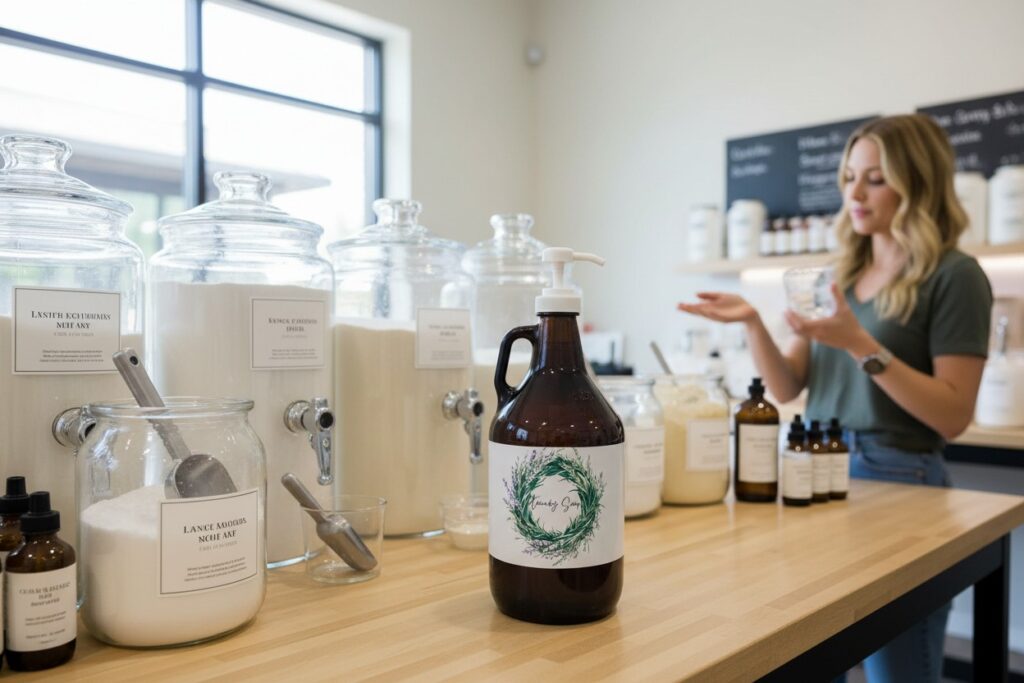
Research highlights that the natural product market growth is evident in an increased demand for organic and low-tox products.
This evolving landscape contributes to the broader narrative of natural product market growth.
Understanding the reasons behind the natural product market growth can help brands strategize effectively.
Industry research from the Organic Trade Association, USDA, and natural products data firm SPINS shows continued growth in natural, organic, and low-tox consumer goods, particularly in household cleaning and personal care categories.
As more consumers question conventional ingredients, packaging waste, and over-fragranced formulas, the natural products market continues to expand across new regions, new retail formats, and new customer demographics.
Such trends are vital as they indicate the natural product market growth across various demographics.
So where exactly is this growth happening and why does it matter for sustainable and refill-focused brands?
The emphasis on natural product market growth aligns with consumers’ desire for safer household options.
The Natural Products Market Is Expanding Nationwide
The U.S. natural products market has seen steady growth over the past decade, with natural and organic categories consistently outperforming conventional products. Consumers are actively seeking:
The ongoing natural product market growth signifies a profound change in how consumers prioritize health and sustainability.
- Low-tox and non-toxic household products
- Fragrance-free and sensitive-skin options
- Minimal ingredient formulas
- Plastic-free and refillable packaging
- Transparent labeling they can easily understand
The significant natural product market growth is further driven by a shift in consumer consciousness.
What’s especially notable is that this growth is no longer confined to early-adopter regions. While coastal states helped lead the movement, the fastest growth today is happening in the Midwest and the South, where natural products are becoming more accessible, affordable, and practical for everyday households.
Coastal markets have historically led the charge in natural product market growth.
California’s dominance in the natural product market growth showcases the state’s early adoption trends.
Coastal Leaders: Where Natural Products Took Root First
California: The Largest Natural Products Market
California remains the single largest market for natural and organic products in the U.S. Consumers there tend to adopt clean-label products early, making the state a testing ground for emerging trends like refill stores, zero-waste shopping, and fragrance-free household care.
Major metro areas such as the San Francisco Bay Area, Los Angeles, and San Diego continue to support:
- Refill shops and bulk sections
- Natural grocery chains
- Independent eco-focused retailers
These regions still matter but they are also more competitive and saturated.
The Northeast & New England: Trust-Driven Natural Shopping
The Northeast including New York, Massachusetts, Vermont, Connecticut, and Pennsylvania has long supported organic food, farmers markets, and small-batch producers. This trust-based shopping culture naturally extends into household and personal care products.
In New England especially, consumers show strong interest in:
- Fragrance-free cleaning products
- Baby-safe and sensitive-skin formulas
- Locally made and transparent brands
- Refillable and low-waste options
This makes the region particularly strong for refill stores, co-ops, and independent natural retailers.
The Midwest: One of the Fastest-Growing Natural Product Regions
While the Midwest is sometimes overlooked in natural product conversations, it is actually one of the fastest-growing markets for low-tox and eco-friendly household products.
States such as Illinois, Minnesota, Wisconsin, Michigan, and Ohio are seeing increased demand for:
- Fragrance-free laundry detergent
- Dishwasher powders with simple ingredients
- Family-safe, budget-conscious clean products
- Practical refill options for everyday use
In these regions, consumers tend to prioritize function, safety, and value over trendiness. Products that are unscented, effective, and clearly labeled perform especially well.
For refill and bulk stores, the Midwest offers:
Many regions are contributing to this natural product market growth, showcasing diverse consumer needs.
- Less competition than coastal markets
- Strong loyalty once trust is established
- A growing base of families seeking healthier alternatives
The South: Rapid Growth Fueled by Families & Practical Clean Living
The Southern U.S. is another region experiencing rapid growth in the natural and low-tox product market. States such as Texas, North Carolina, Georgia, Tennessee, and Florida are seeing a surge in demand for clean household essentials.
Key drivers in the South include:
- Large family households
- Rising awareness of ingredient safety
- Sensitivities to fragrance and harsh chemicals
- Interest in cost-effective, refillable solutions
Many refill stores in the South operate as hybrid spaces—combining natural grocery items, home goods, and bulk cleaning products. Unscented laundry and dish detergents are often top sellers because they appeal to a wide range of customers.
Why Refill Stores Are Growing Alongside Natural Products
Refill stores are becoming a critical part of the natural product ecosystem. As consumers look for ways to reduce waste and avoid plastic packaging, refillable options offer a simple, repeatable solution.
Refill customers consistently look for:
- Laundry detergent powders
- Dishwasher detergent powders
- Liquid soaps in bulk
- Fragrance-free and minimal formulas
Dry powders in particular are gaining traction because they:
- Have long shelf life
- Are easy to scoop and weigh
- Ship efficiently with low environmental impact
- Require no preservatives
The South is especially seeing notable natural product market growth influenced by family-oriented purchasing.
This makes refill stores especially interested in unscented, minimal-ingredient detergents that are easy for staff to explain and customers to trust.
Why Unscented & Minimal Ingredients Are Winning
Across all regions—coasts, Midwest, and South—one trend stands out: unscented is no longer a niche preference.
Consumers are increasingly choosing fragrance-free products because they:
- Reduce skin irritation
- Avoid synthetic fragrance exposure
- Work for babies, pets, and sensitive households
- Layer well with personal scent choices
Minimal-ingredient formulas also help rebuild trust in cleaning products. When customers can understand what’s in a detergent and why it removes hesitation at the refill bin.
The natural product market growth reflects changing dynamics in consumer purchasing patterns.
What This Growth Means for Sustainable Brands
For small brands focused on natural and low-tox products, this market shift presents a real opportunity:
- Demand is expanding beyond saturated coastal cities
- Midwest and Southern refill stores are actively seeking suppliers
- Unscented and refill-ready products reduce buyer risk
- Simple formulations resonate across regions
Brands that emphasize clarity, effectiveness, and honesty are well-positioned to grow alongside this movement.
Looking Ahead: A Nationwide Shift Toward Cleaner Living
The growth of the natural product market is not a passing trend, it reflects a broader change in how Americans approach everyday household care. As refill stores expand and more consumers adopt low-waste habits, demand for clean, unscented, and refillable products will continue to rise across the country.
From California to New England, the Midwest to the South, one thing is clear: simple, trustworthy products are shaping the future of sustainable living.
This natural product market growth is essential for brands looking to expand into new territories.
Refill stores play a crucial role in supporting natural product market growth by promoting eco-friendly habits.
The ongoing trends indicate strong natural product market growth in various regions.
Understanding the factors contributing to natural product market growth can enhance brand strategies.
Brands that align with the natural product market growth trends are likely to thrive.