
You’ve probably seen the “Dirty Dozen” list for produce…
Each year, organizations like the Environmental Working Group (EWG) highlight fruits and vegetables that may carry higher levels of pesticide residues, helping consumers make more informed choices.
It got us thinking what about the products we use to clean our homes every day?
While cleaning products serve an important purpose, not all formulas are created the same. Many conventional options include ingredients added for scent, color, or preservation that may not be necessary for effective cleaning. Becoming more aware of these ingredients is a simple step toward creating a more intentional, low-tox home.
Another “Dirty Dozen” to Be Mindful Of
Here are some commonly used ingredients found in everyday cleaning products that are worth taking a closer look at:
1. Synthetic Fragrance
Often listed simply as “fragrance,” this can include a blend of many different compounds. It’s commonly used to create long-lasting scents.
2. Phthalates
Sometimes used to help fragrance linger, these are not always disclosed on labels but may be present in scented products.
3. Artificial Dyes
Added purely for appearance, dyes don’t contribute to cleaning performance.
4. Ammonia
A strong cleaning agent that can produce noticeable fumes and may be irritating in enclosed spaces.
5. Chlorine Bleach
Common in disinfecting products, but can be harsh and requires careful handling.
6. Quats (Quaternary Ammonium Compounds)
Used in some disinfectants and antibacterial cleaners, often for their germ-fighting properties.
7. Sodium Lauryl Sulfate (SLS)
A surfactant that helps create foam but can be drying or irritating for some.
8. Sodium Laureth Sulfate (SLES)
A related ingredient that may go through additional processing.
9. 2-Butoxyethanol
Found in some heavy-duty cleaners, particularly for grease and grime.
10. Petroleum-Based Solvents
Used in stronger cleaning products, often for breaking down oils.
11. Formaldehyde-Releasing Preservatives
Certain preservatives can slowly release formaldehyde over time to prevent microbial growth.
12. Triclosan
An antibacterial ingredient that has been phased out in many products but is still widely recognized.
It’s Not About Perfection
Creating a more eco-friendly or non-toxic home doesn’t mean replacing everything overnight. Instead, it’s about becoming more mindful of what you bring into your space and making small, manageable swaps over time.
Simple changes — like choosing products with fewer ingredients, opting for refillable options, or selecting items without added dyes or synthetic fragrance — can make a meaningful difference.
A Simpler Approach to Cleaning
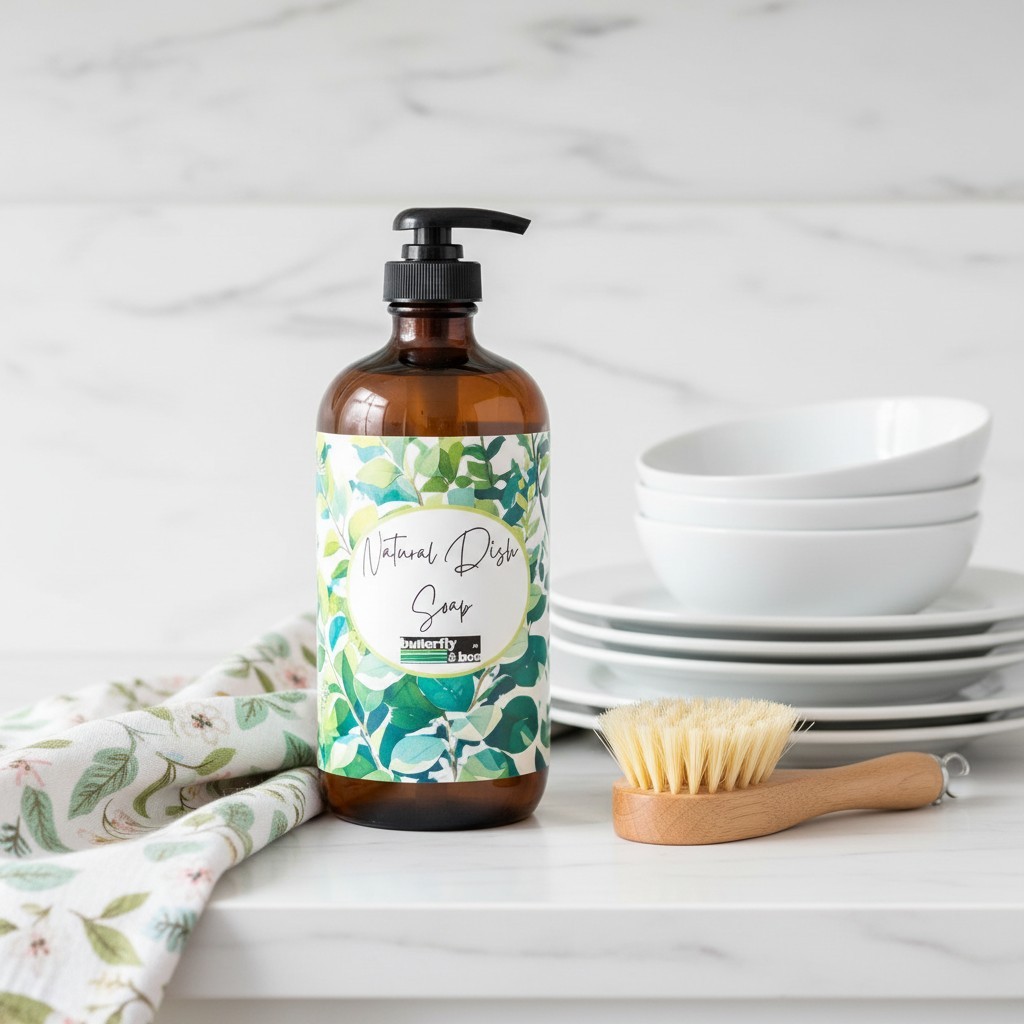
At Butterfly & Bee, we believe cleaning should be both effective and thoughtfully designed. That’s why we focus on simple, plant-based ingredients and low-waste solutions that support a cleaner home and a more sustainable lifestyle.
Whether it’s natural laundry detergents, refillable cleaning products, or reusable home goods, small changes can help create a home that feels both fresh and intentional.
The Bottom Line
The idea behind the “Dirty Dozen” isn’t about fear it’s about awareness. By understanding what’s commonly found in conventional cleaning products, you can make more informed choices that align with your values.
A cleaner home doesn’t have to be complicated. Sometimes, it starts with simply reading a label and choosing a simpler path forward.