
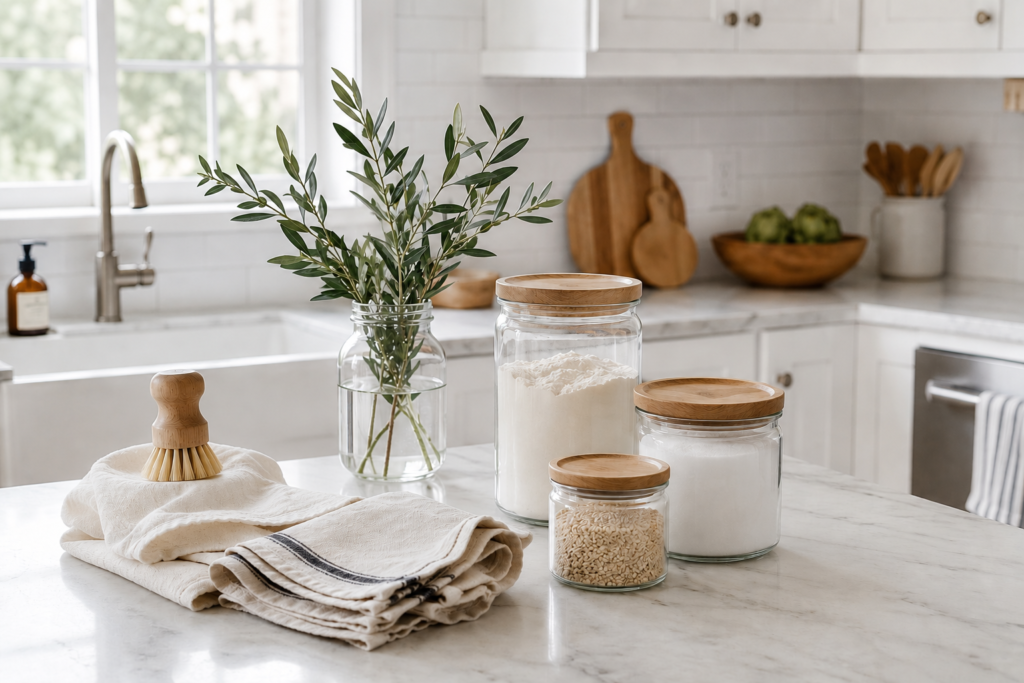
Walk into almost any modern kitchen today and you’ll notice something changing, people are replacing plastic in the kitchen. Glass jars are replacing plastic containers. Cloth napkins are returning to the dinner table. Reusable beeswax wraps are replacing disposable plastic wrap. Even simple cotton kitchen towels are making a comeback.
For many families, this shift is about more than aesthetics. It’s about creating a healthier, lower-waste home with products that feel safer, last longer, and bring warmth back into everyday living.
As conversations around microplastics, sustainability, and non-toxic living continue to grow, more people are rethinking the materials they use every day in their kitchens.
Natural materials like cotton, linen, wood, glass, and beeswax are becoming popular again — not because they are trendy, but because they are practical, reusable, and timeless.
Why Are People Moving Away from Plastic?
Plastic became popular because it was inexpensive, lightweight, and convenient. But over time, many consumers have started questioning whether disposable convenience is worth the environmental and household impact.
Today, concerns about:
- single-use waste
- microplastics
- synthetic materials
- overconsumption
- disposable culture
are pushing families to look for alternatives.
Many households are trying to reduce the amount of plastic they use in areas where food is prepared, heated, washed, or stored. Kitchens naturally became one of the first places people started making simple swaps.
This doesn’t mean eliminating every piece of plastic overnight. For most families, it’s about gradually choosing reusable products made from more natural materials whenever possible.
The Rise of the “Natural Home”
Alongside sustainability, there’s another major trend shaping modern homes: the desire for spaces that feel calmer, warmer, and more connected to nature.
Natural textures are replacing synthetic ones in many homes. Cotton napkins, linen table runners, wooden scrub brushes, glass storage jars, ceramic mugs, and woven baskets all help create kitchens that feel welcoming and lived-in.
Designers often refer to this movement as:
- slow living
- cozy minimalism
- natural home design
- cottage-inspired living
- farmhouse or coastal comfort
But beyond trends, many people simply enjoy products that feel authentic and durable.
Unlike disposable products, natural materials often improve with time. Linen softens with every wash. Cotton towels become more absorbent. Wooden kitchen tools develop character and patina.
These products are designed to be used again and again rather than thrown away after a few uses.
Why Cotton Kitchen Towels Are Trending Again
One of the easiest plastic-free swaps families are making is replacing disposable paper products with reusable cotton towels and cloths.
Flour sack towels, cotton tea towels, and reusable cloth napkins are becoming increasingly popular because they are:
- washable
- reusable
- biodegradable
- soft and absorbent
- durable for daily use
Many people are also rediscovering how versatile cotton towels can be in the kitchen. They can be used for:
- drying dishes
- covering rising bread dough
- cleaning countertops
- wrapping baked goods
- replacing paper towels
- lining bread baskets
Unlike microfiber cloths, which are made from synthetic fibers, cotton is a natural material that can often be composted at the end of its life when untreated.
Cotton towels also fit beautifully into today’s home decor trends. Whether your style is farmhouse, coastal, vintage, minimalist, or cottage-inspired, natural fabrics bring warmth and texture into the kitchen.
Linen Is Making a Comeback
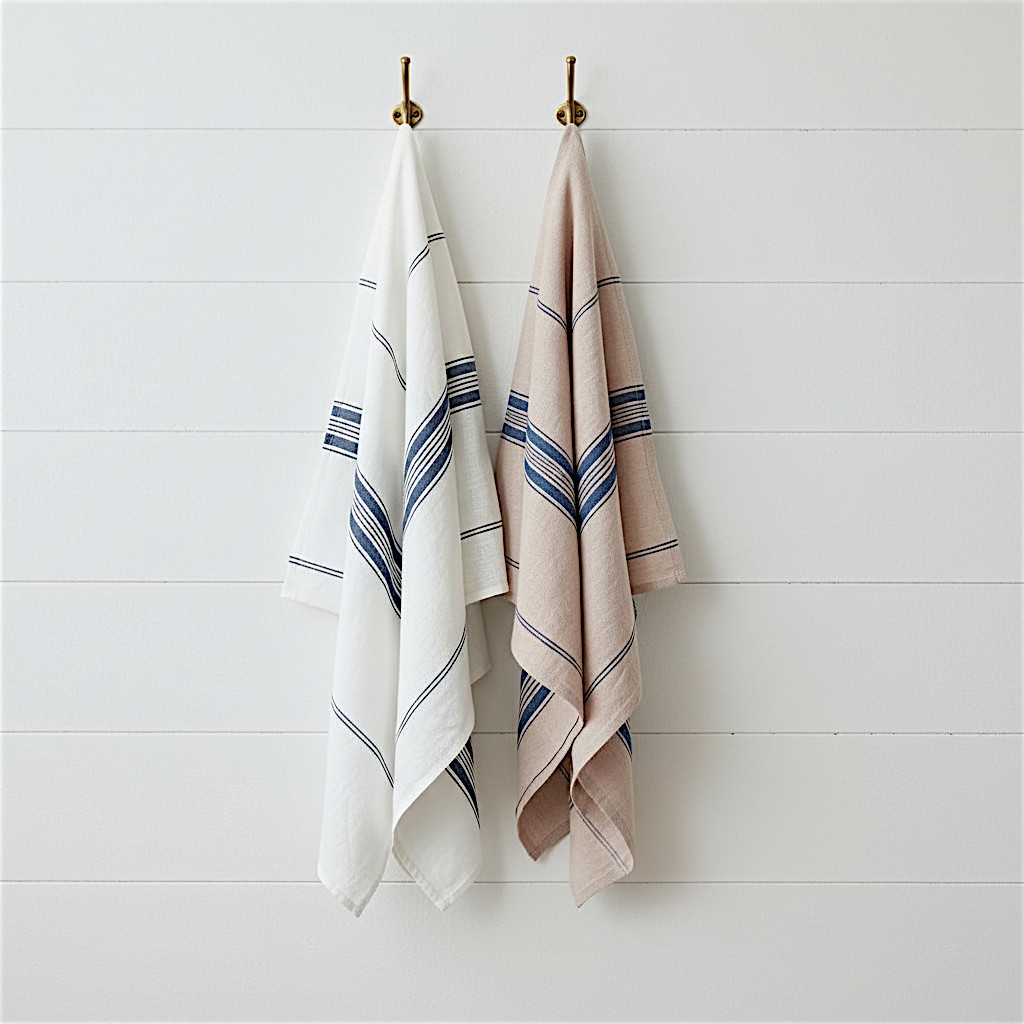
Linen has been used in homes for centuries, and it’s returning in a big way.
Known for its durability and timeless appearance, linen is now appearing in:
- reusable napkins
- table runners
- bread bags
- aprons
- kitchen towels
Linen is often valued because it:
- softens over time
- dries quickly
- lasts for years
- has a natural relaxed look
- works well in both casual and elegant spaces
Many consumers are also drawn to handmade or artisan-style linen products because they feel more personal and less mass-produced.
The shift toward slower, more intentional shopping habits has increased appreciation for products that are crafted carefully and designed to last.
Why Glass Storage Is Growing in Popularity
Glass containers and jars are another major shift happening in kitchens today.
More families are replacing disposable plastic storage with glass because it feels cleaner, more durable, and more reusable over time.
Glass jars and containers are commonly used for:
- pantry storage
- leftovers
- dry goods
- homemade cleaners
- refill stations
- pet treats
- bulk ingredients
Glass also complements the growing refill movement. Many eco-conscious households now refill products like laundry detergent, dish soap, and all-purpose cleaner rather than purchasing new plastic containers repeatedly.
Reusable glass bottles paired with refill systems help reduce waste while creating a more organized and aesthetically pleasing kitchen.
Simple Plastic-Free Swaps for the Kitchen
One reason the plastic-free kitchen movement continues growing is because the changes can be simple and affordable.
Small swaps can make a meaningful difference over time.
Easy Kitchen Swaps to Try:
- Replace paper towels with reusable cotton towels
- Swap plastic wrap for beeswax wraps
- Use cloth napkins instead of disposable napkins
- Store pantry items in glass jars
- Choose wooden or natural fiber dish brushes
- Refill cleaning products instead of rebuying plastic bottles
- Use Swedish dishcloths instead of disposable sponges
Most families start small and slowly build habits over time.
The goal is not perfection. It’s simply making more intentional choices where possible.
The Connection Between Sustainability and Simplicity
Interestingly, many people find that reducing disposable products also simplifies their homes.
Reusable kitchen goods often encourage:
- less clutter
- more thoughtful purchasing
- better quality products
- fewer unnecessary items
- longer-lasting materials
Instead of constantly replacing disposable products, families are investing in pieces designed to last for years.
This mindset aligns closely with the growing interest in:
- sustainability
- minimal waste living
- handmade goods
- natural materials
- slow home design
Consumers are becoming more interested in the story behind the products they bring into their homes — how they are made, what materials are used, and how long they will last.
A Return to Timeless Materials
Cotton, linen, glass, beeswax, and wood are not new innovations. In many ways, they are materials previous generations used every day long before disposable culture became the norm.
Today’s shift back toward natural materials reflects a growing desire for homes that feel healthier, calmer, and more connected to the environment around us.
Whether it’s a reusable linen napkin, a cotton flour sack towel, or a simple glass jar on the kitchen counter, these small choices are helping families create spaces that are both practical and beautiful.
And while no home will ever be perfectly plastic-free, many people are discovering that even small swaps can make everyday living feel a little more intentional.