
Over the past decade, something powerful has been happening in homes across the country.
Quietly, steadily, people have been rethinking the products they bring into their lives, from what they eat to how they clean their homes, wash their clothes, and care for their families and pets.
What started as a niche movement, organic food, natural skincare, DIY cleaners, has grown into something much bigger: a shift toward low-tox, sustainable living.
And now, a new evolution is taking shape.
Not just what we use, but how it’s packaged, refilled, and reused.
Where the Natural Products Movement Began
The modern natural living movement didn’t begin with aesthetics, it began with concern.
Consumers started asking:
- What’s actually in my cleaning products?
- Why are there so many unpronounceable ingredients?
- Are these safe for my children, pets, and long-term health?
Organizations like the Environmental Working Group helped bring awareness to ingredient transparency through tools like their Skin Deep® database.
At the same time, agencies like the United States Environmental Protection Agency introduced programs focused on safer chemical use and environmental impact.
Consumers got smarter and with that, expectations changed.
The Shift From “Natural” to “Low-Tox and Minimal”
At first, “natural” meant botanical ingredients, essential oils, and plant-based formulations.
But over time, consumers began to realize something important:
Not everything labeled “natural” is actually simple, safe, or necessary.
This led to a new mindset, less is better.
Today’s conscious consumer is looking for:
- Short ingredient lists
- Ingredients they recognize
- Products that do one job well
Organizations like Green Seal have helped define safer, more environmentally responsible product standards.
In many ways, the future began to look a lot like the past, simpler, more intentional, and less wasteful.
The Packaging Problem No One Could Ignore
While ingredient awareness grew, another issue became impossible to overlook: plastic waste.
According to the United Nations Environment Programme, millions of tons of plastic enter the environment each year, much of it from single-use packaging.
Even the most “natural” products often come packaged in plastic bottles, pumps, and non-recyclable components.
“Is this really eco-friendly if I throw it away after one use?”
That question changed everything.
The Rise of Refill Culture
Refill culture isn’t entirely new, but it’s rapidly expanding.
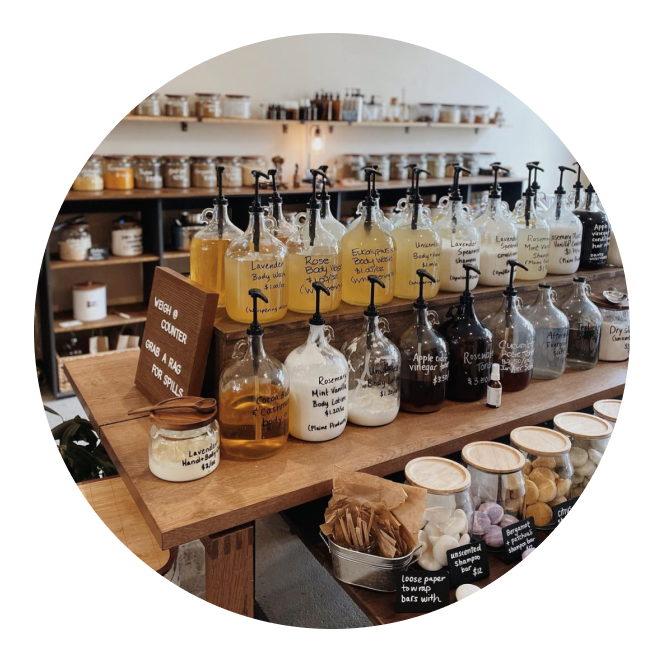
Across the U.S. and globally, we’re seeing growth in:
- Refill stores
- Zero-waste shops
- Bulk cleaning and personal care stations
The Zero Waste International Alliance has long promoted systems that eliminate waste rather than manage it.
Customers now bring their own containers to refill:
- Laundry detergent
- Dish soap
- Cleaning products
- Pet care essentials
Why refill is growing:
- Less waste
- Cost efficiency
- Simpler routines
- More intentional shopping
Refill is not just a trend, it’s a shift in behavior.
Are Refill Stores Actually Growing?
Yes and steadily.
While still niche, refill stores are expanding alongside the broader sustainable products market.
Organizations like Nielsen and McKinsey & Company continue to report rising demand for environmentally responsible products.
Retailers are actively looking for refill-friendly products.
What Refill Stores Are Looking For
If your goal is to get into refill shops, here’s what matters most:
- Simple, transparent formulas
- Unscented or lightly scented options
- Stable, shelf-friendly products
- Bulk compatibility (2.5–5 gallon formats)
- A strong, authentic brand story
The Challenges Facing the Natural & Refill Movement
Despite the growth, there are real challenges that continue to shape the market.
1. The Price Question
Natural products are often more expensive upfront.
This is due to:
- Higher-quality raw ingredients
- Small-batch production
- Ethical sourcing
- Sustainable packaging
But here’s the key insight:
Refill systems can actually reduce cost over time.
The challenge isn’t just price, it’s perception.
Consumers often compare:
- A $15 natural product
vs. - A $4 conventional option
…and make a quick decision.
2. Consumer Habits
This is where intention meets reality.
Many consumers say they want:
- Non-toxic homes
- Less plastic
- Simpler ingredients
But in practice?
Convenience still wins.
Most people:
- Shop at grocery stores
- Buy what’s familiar
- Choose what’s easy
Refill is intentional. Convenience is automatic.
3. The Convenience Gap
Refill systems require:
- Planning ahead
- Bringing containers
- Visiting a specific location
Traditional shopping requires none of that.
And that’s the gap.
Until refill becomes more accessible, convenience will continue to be a major barrier.
4. Ingredient Sourcing
Natural products are built differently and that comes with challenges.
Brands must navigate:
- Seasonal ingredient variability
- Smaller supplier networks
- Certification requirements
- Higher ingredient costs
Natural ingredients often cost more because they are less processed and more responsibly sourced.
5. Consumer Confusion & Trust
Terms like “natural,” “clean,” and “eco-friendly” are widely used, but not always clearly defined.
The Federal Trade Commission provides guidance on environmental marketing claims to help reduce misleading information.
The challenge isn’t lack of interest, it’s lack of clarity.
6. Refill System Logistics
For brands and stores, refill comes with operational challenges:
- Bulk packaging and transport
- Product stability
- Storage and dispensing systems
- Customer education
Even well-designed refill systems require thoughtful execution.
Why This Movement Is Still Growing
Despite these challenges, the direction is clear.
Consumers are moving toward:
- Fewer products
- Better ingredients
- Less waste
And importantly:
They want brands they trust.
The Future of Natural & Refill Living
Looking ahead, we’re likely to see:
- More concentrates and waterless products
- Expansion of refill infrastructure
- Hybrid retail + refill models
- Greater transparency in sourcing and packaging
Why It Really Matters
This movement isn’t just about products.
It’s about:
- Safer homes
- Less environmental impact
- Simpler, more intentional living
- A better future for the next generation
Small changes at home can create a lasting impact.
Final Thoughts
The rise of natural and refill-based living reflects a deeper shift in how we think about consumption.
It’s not about doing everything perfectly.
It’s about making better choices, one product, one refill, one habit at a time.
The challenge isn’t that people don’t care, it’s that sustainable choices still require more intention.
And the brands that succeed will be the ones that make those choices easier